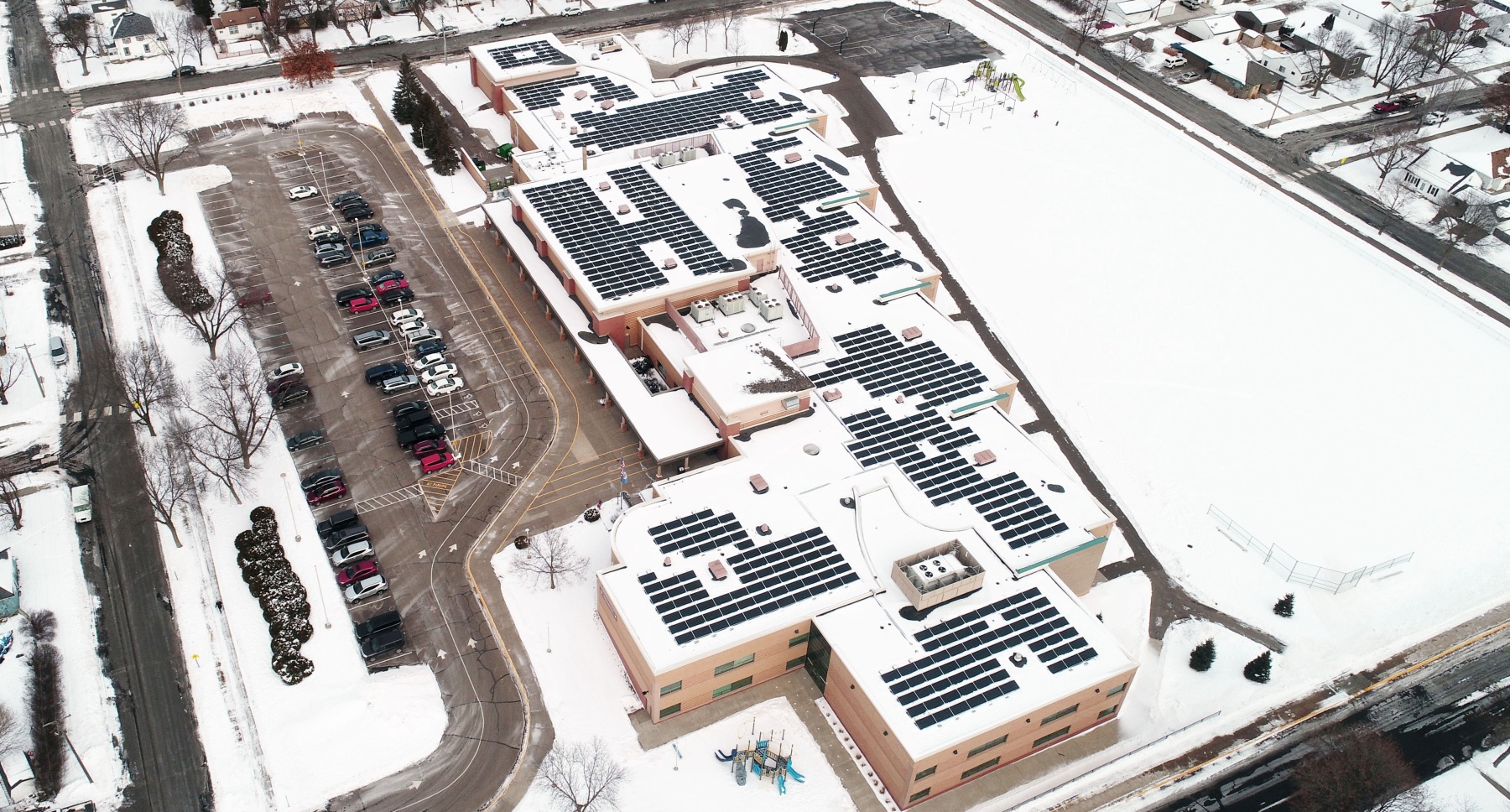
Energy costs are a significant expense for Minnesota schools. Installing solar can help schools reduce electricity costs, provide long-term savings for local taxpayers, and give students hands-on opportunities to learn about renewable energy.
MnSEIA supported the creation and expansion of Minnesota's Solar for Schools program, which provides grants to help eligible schools install solar energy systems and incorporate renewable energy into their curriculum.
About the Solar for Schools Program
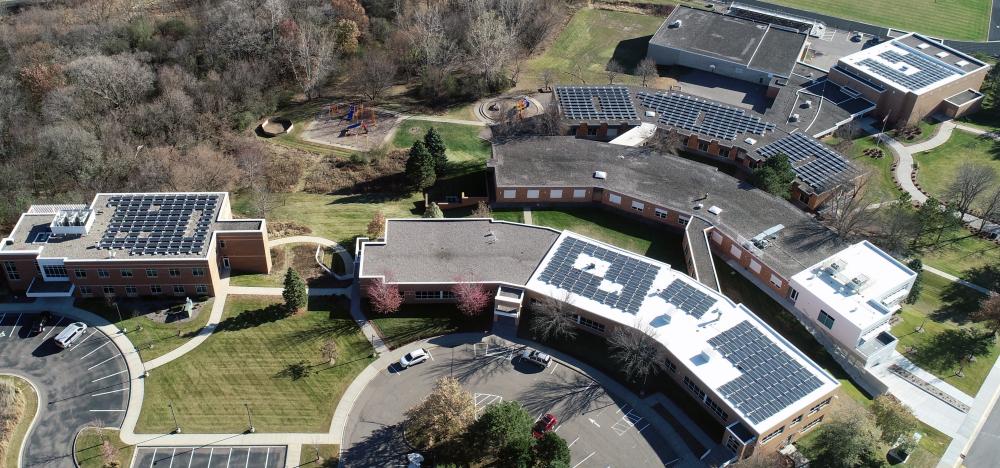
The Minnesota Legislature established the Solar for Schools program during the 2021 Special Legislative Session, with an initial $8 million appropriation for K-12 public schools and $2.5 million for the Minnesota State Colleges and Universities system.
The program quickly generated significant interest from schools across the state. In 2023, MnSEIA helped secure an additional $29.3 million in funding to expand the program and bring solar to more Minnesota schools.
Beginning in 2024, program changes brought schools in Xcel Energy territory into the Department of Commerce-administered grant program, creating a more unified program for eligible schools across Minnesota.
The program has continued to expand. According to the Minnesota Department of Commerce, nearly 200 Solar for Schools grants have been awarded or are in progress, and Minnesota is approaching 400 solar-powered schools.
These projects are helping schools manage electricity costs while creating opportunities for students to learn about renewable energy firsthand.
How the Program Works
The Solar for Schools program is administered by the Minnesota Department of Commerce and provides grants to eligible schools for the purchase and installation of solar energy systems.
Eligible applicants include public school districts, Tribal contract schools, cooperative school districts, and Minnesota State Colleges and Universities. Grant amounts depend on factors such as school eligibility, financial need and system size.
Schools receiving grants must incorporate renewable energy into their curriculum, giving students opportunities to learn about solar energy and see the technology operating at their own school.
Funding rounds, eligibility requirements, grant amounts, and application deadlines can change. For the latest program information and application materials, visit the Minnesota Department of Commerce's Solar for Schools program website.
Resources for Schools
Interested in bringing solar to a school in Minnesota? These resources can help schools understand the program, evaluate project options and get started.
- Minnesota Department of Commerce: Solar for Schools – Find program information, eligibility requirements, grant funding opportunities, application materials and updates.
- Clean Energy Resource Teams (CERTs) – Get guidance on evaluating solar for your school, navigating the grant process, working with developers and incorporating solar into the classroom. CERTs also provide technical assistance to schools interested in pursuing solar projects.
- We Share Solar – Explore hands-on educational programming that gives middle and high school students experience building functional solar electric systems.
MnSEIA's Role
MnSEIA works to advance policies and programs that support solar and energy storage development across Minnesota. Our work on Solar for Schools helped secure funding, improve program design, and expand opportunities for schools to benefit from solar.
Solar for Schools is an example of how state policy can support Minnesota's solar industry while delivering meaningful benefits to schools, students, and local communities.