Minnesota has a long history of leadership in community solar. Established in 2013, the state's Community Solar Garden (CSG) program has expanded access to solar energy for residents, businesses, and organizations while creating opportunities for local economic development.
In 2026, the program was renamed the Melissa Hortman Community Solar Garden Program in recognition of the late Speaker Emerita's role in establishing Minnesota's community solar market.
About Minnesota's Community Solar Garden Program
Minnesota established one of the first community solar programs in the country in 2013. The program became a national model, attracting private investment and creating opportunities for customers who could not or did not want to install solar on their own property.
In 2023, the Minnesota Legislature passed significant updates to the program, creating the Low- and Moderate-Income Accessible Community Solar Garden Program, administered by the Minnesota Department of Commerce. The changes were designed to expand access, strengthen consumer protections and support continued community solar development.
The updated program launched in January 2024 for new community solar gardens in Xcel Energy's Minnesota service territory.
Previously approved projects may remain in Xcel Energy's legacy Solar*Rewards Community program or, in certain circumstances, transition to the Department of Commerce program. Community solar outside Xcel Energy territory is offered through participating utilities, which administer their own programs.
The program continues to support significant solar development across Minnesota. As of August 2026, the Department of Commerce reported 138 approved projects totaling 196 MW, with additional projects moving toward operation.
How Community Solar Gardens Work
Community solar gives customers the opportunity to participate in a shared solar project without installing or maintaining their own solar panels.
A solar garden generates electricity that is delivered to the utility grid. Subscribers receive credits on their electricity bills based on the energy produced by their share of the project.
Community solar can be an option for people who rent, live in multi-unit buildings, have unsuitable rooftops, or simply prefer not to install their own solar system. Businesses, nonprofits, schools and other organizations may also participate, depending on the program and project requirements.
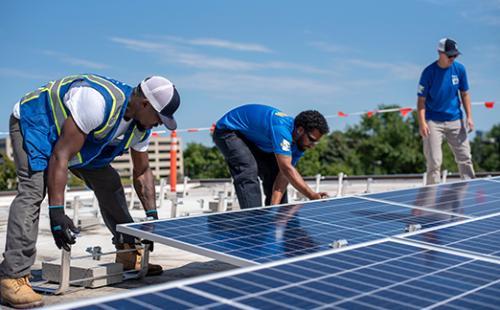
Community solar projects also support Minnesota's economy by creating opportunities for local businesses, generating investment, and supporting jobs across the solar industry.
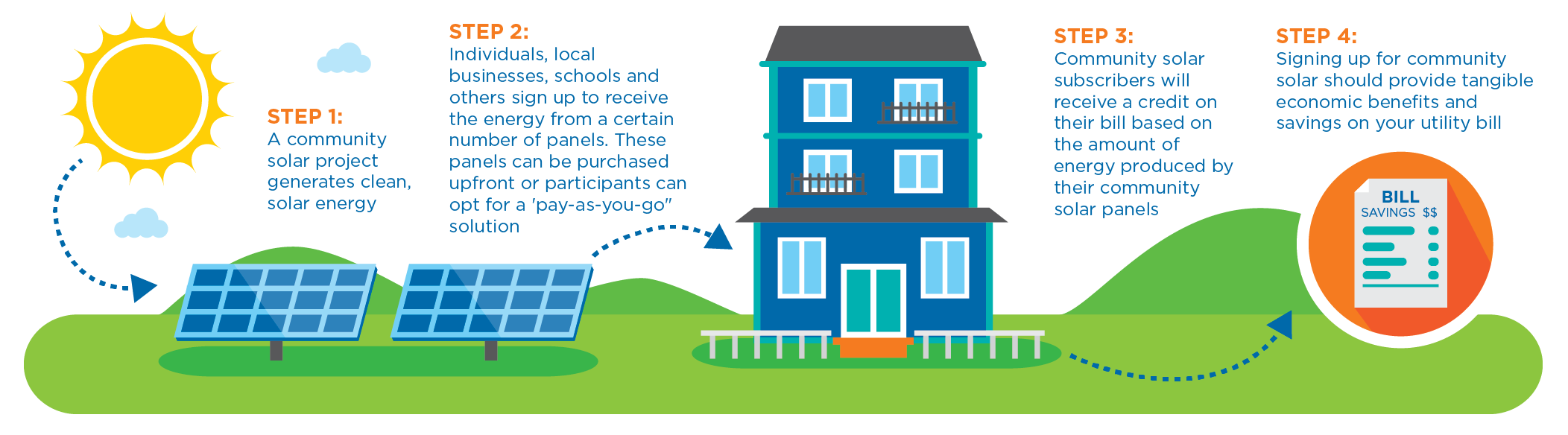
Graphic courtesy of Vote Solar
Minnesota's Low- and Moderate-Income Accessible CSG Program
The Minnesota Department of Commerce administers the current program for new community solar gardens in Xcel Energy's Minnesota service territory.
The program includes requirements designed to expand participation and provide consumer protections. These include:
- At least 30% of each project's capacity must be subscribed to by income-eligible households.
- An additional 25% of project capacity must be subscribed to by income-eligible households, affordable housing providers or public interest subscribers, such as schools, faith communities and nonprofits.
- Individual community solar gardens may be up to 5 MW in size.
- Residential subscribers cannot be charged exit fees or have their credit scores checked as a condition of enrollment.
- Subscription costs, including fees, cannot exceed the value of the subscriber's monthly bill credits. Income-eligible households receive additional savings protections.
Program requirements, application windows, capacity availability and other details may change. Visit the Minnesota Department of Commerce for current program information.
MnSEIA's Role
MnSEIA has worked alongside legislators, regulators, utilities, developers and other industry partners to establish and strengthen Minnesota's community solar market.
Our work has included advocating for policies that support project development, participating in regulatory proceedings, bringing stakeholders together to address program challenges, and working to maintain fair and workable program rules.
MnSEIA continued this work through the 2023 legislative updates, which established the current Low- and Moderate-Income Accessible Community Solar Garden Program.
In 2026, the program was renamed in honor of Melissa Hortman, who sponsored the original legislation establishing Minnesota's community solar program in 2013.
MnSEIA continues to advocate for policies that support a strong community solar market, expand access to solar energy and provide opportunities for Minnesota businesses and communities.